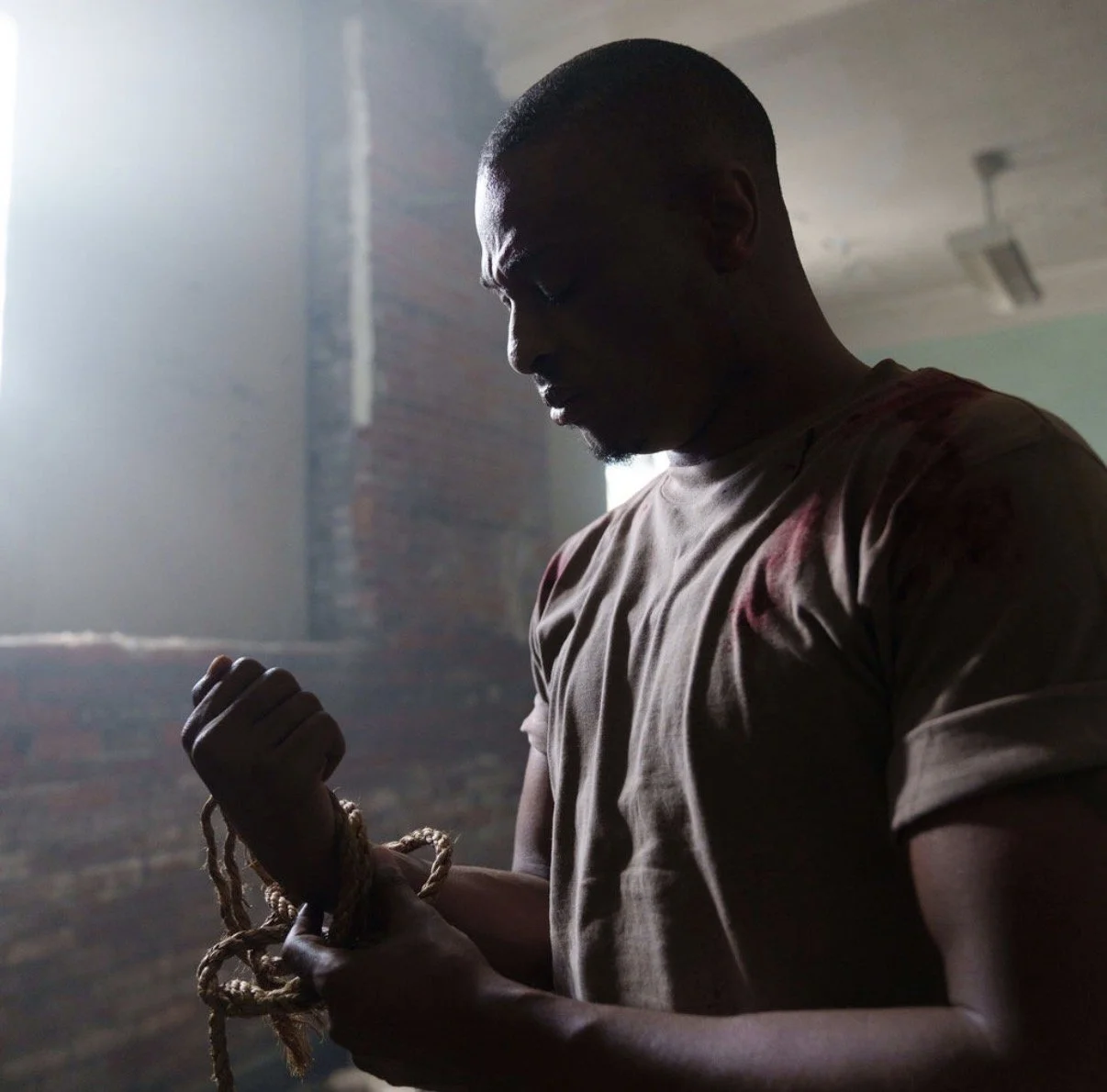
trevor kelly
Trevor’s defining trait is his capacity for love ,love for his wife, love for his parents, love for the teammate he couldn’t save. That same love makes the hate he encounters feel even sharper. When he survives the attempted lynching, the violence hits him in the same place as the war: sudden, senseless, personal. The rope around his neck becomes a mirror to the restraints in that desert room, the same terror, the same desperation, the same voice telling him to survive.
But survival changes him.
Trevor becomes a man caught between two worlds: the soldier trained to act, and the civilian expected to wait. His silence, his trembling hand, the way he studies every doorway , it’s all evidence of a war that followed him home. And yet beneath all of that is a fierce determination. Trevor is not just fighting attackers; he’s fighting the version of himself that trauma is trying to turn him into.
Through the film, Trevor wrestles with whether justice is something you wait for or something you take. His journey isn’t about vengeance alone it’s about reclaiming his body, his voice, his breath, and his sense of belonging in a country that tried to steal all of it from him.
Trevor Kelly is a survivor, a protector, a man trying to stitch himself back together in a world that keeps tearing the thread. And by the end, the audience doesn’t just want him to win. They want him to heal.